
"siphon brewing technique"
300 article(s) found

Grinding coffee powder is a great knowledge. Is it important to grind coffee beans?
Grinding coffee powder is a great knowledge. Is it important to grind coffee beans? Many people may think so. Because some coffee powders are already ground when they are bought, or they just need to tell coffee sellers how to make coffee, and they will automatically deal with it. Therefore, many people may not know much about grinding coffee beans and how to extract and cook it will have an impact on a cup of coffee. that

Growth Environment and brewing of small Coffee
Small grain coffee scientific name: Coffea arabica family genus: Rubiaceae coffee genus morphological characteristics: small trees or large shrubs, plant height 5 meters 8 meters. Base usually much branched, old branches gray-white. Nodes inflated, young branches glabrous. Leaves thinly leathery-ovate-lanceolate or lanceolate, apex long acuminate, base cuneate or slightly obtuse, entire or shallowly wavy, both surfaces glabrous. Cymes several clustered in leaf axils
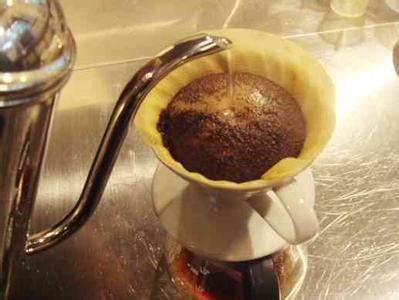
Traditional coffee making methods and coffee making skills
Siphon brewing method: using the principle of steam pressure (a method invented by a marine engineer, probably inspired by a steam engine), the heated water flows upward from the lower beaker through a siphon and filter cloth, and then mixed with the coffee powder in the upper cup, and the ingredients in the coffee powder are completely quenched out, and the quenched coffee liquid flows again after removing the fire source.

The difference between siphon coffee and hand-brewed coffee
Hand brewing coffee uses filtration, while siphon coffee combines soaking and filtration, which can actually highlight the flavor, but now popular boutique coffee often uses filtering to brew coffee, so let's first introduce hand brewing coffee. I try to simplify the way I speak in vernacular, and then try not to write too much. I can almost publish a book after I have written it all, so it is big.

Yunnan coffee common sense coffee growing environment and brewing
Arabica scientific name: Coffea arabica family: Rubiaceae coffee morphological characteristics: small trees or large shrubs, plant height 5~8 meters. Base usually much branched, older branches gray. nodes dilated, young branches glabrous. Leaves thin leathery ovate-lanceolate or lanceolate, apex long acuminate, base cuneate or slightly obtuse, entire or shallowly undulate, glabrous on both sides. Cymes several clustered in leaf axils

The coffee in the siphon pot is too scorched. Tutorial video steps.
The coffee in the siphon pot smells too scorched. Step 1. Wipe the next bottle dry, do not have water droplets, or it will break. 2. Pull the upper seat back to the right and pull it straight up. Do not pull and break. 3. The spring under the middle filter should be tightened, the hook should be hooked, and it should be set to the center. 4. Insert the upper seat tightly down. 5. Water quality: pure water, pure water, magnetized water, do not use open

Siphon coffee champion brewing tips sharing siphon coffee or espresso which tastes better?
Professional coffee knowledge exchange more coffee bean information Please follow the coffee workshop (Wechat official account cafe_style) many coffee enthusiasts have a siphon pot at home, although the brewing process is not difficult, it may not be possible to win a prize or even become a master. I met the 2013 world ranking at the Accro Coffee Hong Kong siphon barista contest.

Siphon coffee extraction principle and technology explain what kind of coffee is suitable for siphon pot?
Professional coffee knowledge exchange more coffee bean information please follow the coffee workshop (Wechat official account cafe_style) siphon pot, also known as vacuum pot, Wikipedia data shows that it was invented by the German company Loeff around 1830. Now the most common style is composed of two glass pots, the upper pot is generally cylindrical, and the throat at the end is connected and suspended by a metal bracket.

Common sense of Chinese Coffee growth Environment and brewing of small Coffee
Small grain coffee scientific name: Coffea arabica family genus: Rubiaceae coffee genus morphological characteristics: small trees or large shrubs, plant height 5 meters 8 meters. Base usually much branched, old branches gray-white. Nodes inflated, young branches glabrous. Leaves thinly leathery-ovate-lanceolate or lanceolate, apex long acuminate, base cuneate or slightly obtuse, entire or shallowly wavy, both surfaces glabrous. Cymes several clustered in leaf axils
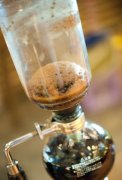
Coffee pot operation chemistry experiment siphon pot
Introduction to utensils: the siphon pot, also known as the plug pot, is a kind of coffee ware invented by the British, improved and carried forward by Japan. Before the invention of espresso machine, siphon pot was widely used in Europe, but with the invention and popularization of espresso machine, siphon

Common sense of Coffee beans in Yunnan growth Environment and brewing of small Coffee
Small grain coffee scientific name: Coffea arabica family genus: Rubiaceae coffee genus morphological characteristics: small trees or large shrubs, plant height 5 meters 8 meters. Base usually much branched, old branches gray-white. Nodes inflated, young branches glabrous. Leaves thinly leathery-ovate-lanceolate or lanceolate, apex long acuminate, base cuneate or slightly obtuse, entire or shallowly wavy, both surfaces glabrous. Cymes several clustered in leaf axils

The difference between suggested parameters and flavor description of different utensils for cooking [Sumatran tiger Mantenin]
Professional coffee knowledge exchange more coffee bean information Please follow the preface of the coffee workshop (Wechat official account cafe_style) We usually brew tiger Manning with KONO filter cup, so what's the difference between other utensils? Before using other utensils for brewing, we must first understand the characteristics of Tiger Manning and the design principle of the utensils before we can judge what is suitable for research.

What's the difference between siphon coffee and hand brewed coffee?
I try my best to simplify the vernacular speaking of deep things, and then try not to write too much as much as possible. if you think I haven't read enough, it means you are very interested in studying. I would suggest that such friends can go to the bookstore to buy professional books to do comprehensive study. The equipment compares the coffee brewing mode of the filter method of hand-brewed coffee, the prototype

Hong Kong Siphon Coffee Champion Brewing Tips Share
Professional barista communication, please pay attention to coffee workshop (Weixin Official Accounts cafe_style ) Many coffee enthusiasts, there is a siphon pot at home, although the brewing procedure is not difficult, but to rush to the prize or even become a master, not all of them do. I met the world number one in 2013 and won two consecutive years in Hong Kong at Accro Coffee Hong Kong Siphon Barista Competition

How do Sumatran coffee beans taste good? What are the recommendations of Sumatra coffee beans
For more information on coffee beans, please follow the coffee workshop (Wechat official account cafe_style) Manning, a kind of coffee from Sumatra in Indonesia, Asia, also known as Sumatran coffee. Manning, produced in Sumatra, Indonesia, Asia, also known as Sumatran coffee. The main producing areas are Java, Sulawesi and Sumatra.

Coffee pot operation chemistry experiment siphon pot
It is very important to choose a coffee pot that suits you. Although the siphon pot is troublesome to use and clean, it is definitely one of the necessary coffee utensils for coffee enthusiasts. Introduction to utensils: the siphon pot, also known as the plug pot, is a kind of coffee ware invented by the British, improved and carried forward by Japan. Before the invention of the espresso machine, siphon pots were widely used in Europe.
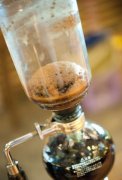
Coffee pot operation chemistry experiment siphon pot
It is very important to choose a coffee pot that suits you. Although the siphon pot is troublesome to use and clean, it is definitely one of the necessary coffee utensils for coffee enthusiasts. Introduction to utensils: the siphon pot, also known as the plug pot, is a kind of coffee ware invented by the British, improved and carried forward by Japan. Before the invention of the espresso machine, siphon pots were widely used in Europe.

The secret of brown fragrance
High-quality coffee beans are the source of delicious coffee. A good coffee bean smells delicious and mellow, looks like full and uniform particles, complete shape and bright color, and is brittle by hand pressure (unbreakable hand pressure is called "dead bean").
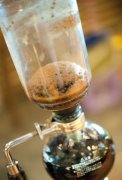
Coffee pot operation chemical experiment siphon pot
It is very important to choose a coffee pot that suits you. Although the siphon pot is troublesome to use and clean, it is definitely one of the must-have coffee utensils for coffee enthusiasts. Syphon pot, also known as plug pot, is invented by the British, Japan improved and carried forward a coffee utensils. Before the invention of the Italian coffee machine, siphon pots were widely used in Europe, but with Italy

There are two reasons for the excessive extraction of espresso.
All modern coffee extraction is the two core processes of soaking and filtration, which belongs to the category of physics, and there is basically no chemical change in the process. The differences in the thickness of coffee powder, the length of soaking time, the method of separation and filtration, and so on, have created a wealth of coffee brewing utensils and techniques. Although the core process of coffee extraction is the same, according to the pressure used in coffee extraction and the extraction